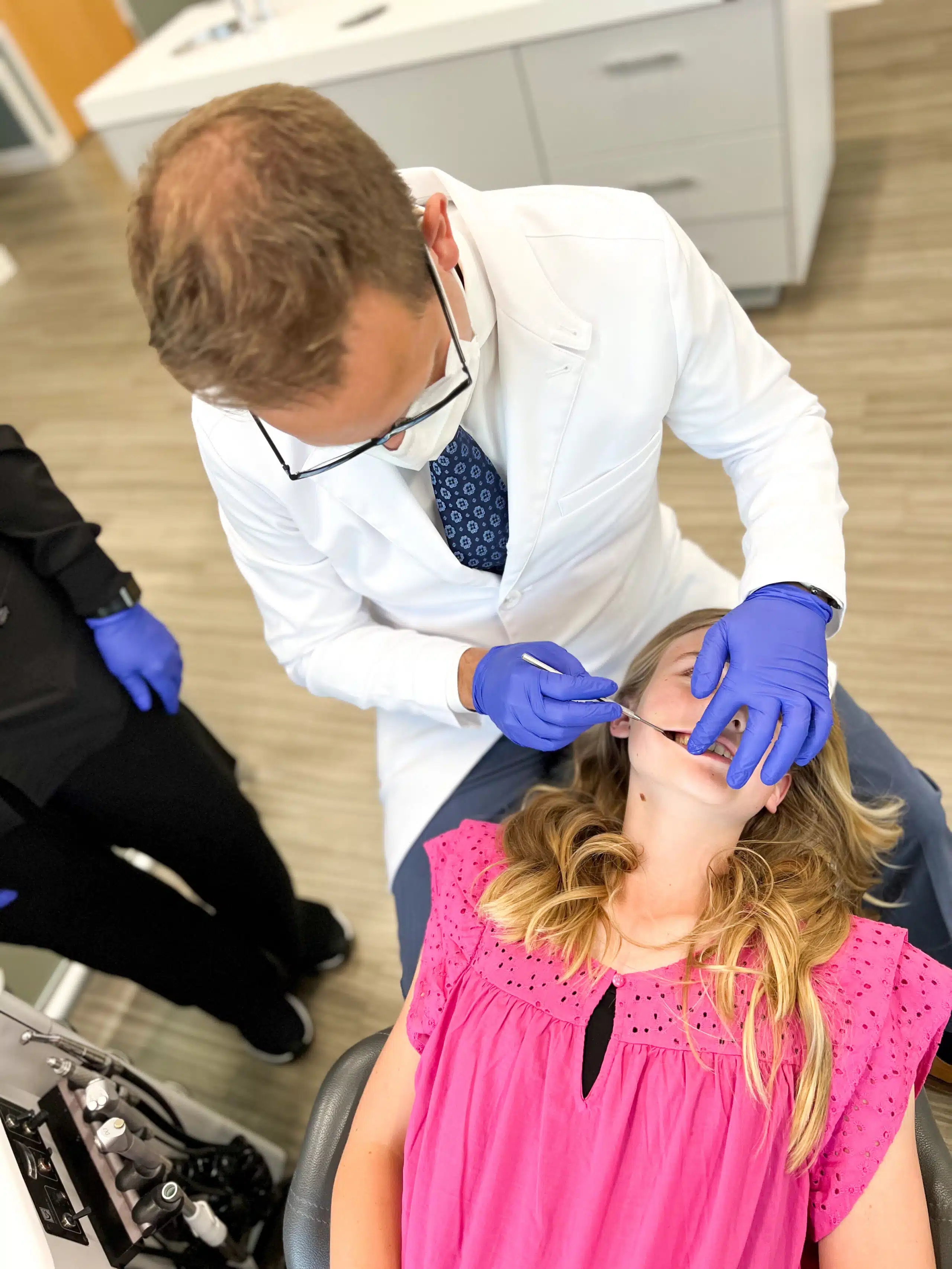
Rubber bands, or elastics, connect the upper and lower braces to move the jaws and bite into the right relationship. Braces straighten each arch; elastics line the two arches up with each other, which is why wearing them as directed affects your finish date.
Being handed a bag of tiny rubber bands partway through treatment can feel like a step backward. The teeth already look straighter, so why add something new? The answer is that straight teeth and a correct bite are two different goals. Below we explain what elastics do, the difference between elastics and the colored ties on your brackets, and how to make wearing them as easy as possible.
What Do Rubber Bands Do on Braces?
Brackets and archwires are very good at moving teeth within one arch. They level, rotate, and align the teeth on the top and the bottom. What they cannot do on their own is change how the upper teeth meet the lower teeth when you bite down. That job usually falls to elastics.
Each elastic hooks onto small attachments on the upper and lower braces. Because it is stretched between the two arches, it pulls them toward each other in a specific direction. Worn consistently, that gentle pull shifts the teeth and guides the bite into place. Our braces in Fort Wayne page describes braces plus elastics as the option for bites that need the jaws related to each other differently.
Elastics are also one of the tools used in bite correction more generally, alongside braces, aligners, and orthopedic appliances for growing patients. You can read how they fit together in our post on bite correction and why it matters.
Are Elastics the Same as the Colored Bands on Braces?
No, and this is one of the most common points of confusion. The small colored or clear bands around each bracket are elastic ties. They hold the archwire in the bracket, they stay on between visits, and your orthodontic team replaces them at your adjustment appointments. You do not take them off yourself.
Interarch elastics, the rubber bands covered here, are different. They are removable, you put them on and take them off yourself, and they stretch between the upper and lower teeth. The table below sums up the difference.
| Question | Elastic ties | Interarch elastics (rubber bands) |
|---|---|---|
| Where are they? | Around each bracket | Hooked between upper and lower braces |
| What do they do? | Hold the archwire in the bracket | Pull the upper and lower teeth into a better bite |
| Who changes them? | Your orthodontic team at adjustment visits | You, at home, on the schedule you are given |
| Can they come off? | Not by you | Yes, for eating and brushing, then back on |
Why Is Wearing Elastics So Important?
Elastics only work when they are in. Teeth respond to light, steady force, so a pull that comes and goes does far less than one that is constant. Wearing them for a few hours and then leaving them out lets the teeth drift back, which means the same correction has to be repeated.
That is why elastic wear is the part of treatment that most affects the finish date. How long comprehensive treatment takes depends on the bite, on growth, and, honestly, on how well elastics get worn. Dr. Joel Johnson gives you a projected timeline in writing at the consultation and revises it if the case moves faster or slower than planned.
Consistent wear also protects your budget. Our financial policies note that elastic noncompliance can bring additional charges, and treatment that runs past its estimate because of missed elastic wear can add to the cost. Patients receive a call and text before any charge is applied, but the simplest way to avoid it is to wear the elastics as directed.
Which Bite Problems Do Elastics Help Correct?
The direction an elastic pulls depends on where it is hooked, and that is chosen to match the bite. When the upper front teeth sit too far ahead of the lower ones, elastics run from the upper front teeth toward the lower back teeth to bring the bite together front to back. When the lower teeth sit ahead of the upper teeth, the elastics run the opposite way.
Other patterns use other shapes. Vertical elastics help close an open bite, where the front teeth do not meet when the back teeth are together. Cross elastics run from the inside of one tooth to the outside of another to help correct a crossbite. Your orthodontist may change the pattern as the bite improves, so the configuration you start with is not always the one you finish with.
Elastics have limits. When the difference between the upper and lower jaws is too large for tooth movement alone, growing children may benefit from early treatment that guides jaw growth, and some adults need orthodontics combined with jaw surgery. Our post on surgical orthodontics explains when that is the case.
What Is It Like to Wear Rubber Bands?
Expect your teeth to feel sore for the first few days after you start wearing elastics or move to a new configuration. That soreness is a sign the teeth are responding, and it fades as you get used to them. Taking the elastics out because they feel sore actually makes the next few days harder, because the teeth have to start adjusting all over again.
Most people find that elastics become routine within a week or two. You take them out to eat and to brush, then put fresh ones back in. Elastics lose their stretch with use, which is why they are usually replaced with new ones regularly instead of being reused for days.
Tips for Remembering Your Elastics
Keep a small supply with you in a backpack, purse, or car so a broken band never means a gap in wear. Put fresh elastics in right after brushing so it becomes part of the same habit. If your elastics run out, ask the office for more before your next visit rather than going without. And if a hook comes loose or a bracket breaks, call or text the office that treats you so our team can help.
How Long Will I Need to Wear Elastics?
It depends on how far the bite needs to move and how consistently the elastics are worn. Some patients need them for a few months, others for longer, and the configuration may change as the bite improves. Your orthodontist checks progress at each adjustment visit and will tell you when the bite has reached its goal.
Once the bite is corrected and the braces come off, a retainer goes on the same day to hold the result in place. You can learn more about that final stage on our retainers in Fort Wayne overview.
Frequently Asked Questions
Do I wear my rubber bands while eating?
Most patients take them out to eat and brush, then put fresh ones back in. Follow the specific instructions your orthodontist gives you for your case.
What happens if I forget to wear my elastics?
The bite correction slows down or partly reverses, so the same progress has to be made again. Missed wear is one of the most common reasons treatment takes longer than estimated.
Do rubber bands hurt?
Your teeth may feel sore for the first few days after you start wearing elastics or change to a new pattern. The soreness fades as the teeth adjust, and wearing the elastics consistently helps it pass sooner.
Can clear aligner patients wear elastics too?
Yes. Elastics can be used with braces or aligners to help guide teeth into the proper position when the bite needs correcting.
Ask About Your Bite at a Free Consultation
If you are already in treatment or just starting to think about braces, our team can explain what your bite needs and how elastics fit in. Start your free consultation at our Fort Wayne, Auburn, or Fishers office, or learn more about Dr. Joel Johnson.