Early Orthodontic Treatment in Indiana
Start your child’s journey to a healthy smile early. Our pediatric orthodontist in Indiana provides comprehensive evaluations and early intervention to guide proper dental development.
Proactive Orthodontic Care for Children
Early orthodontic treatment can prevent more complex issues later. Our pediatric orthodontic expertise gives us the unique knowledge and experience to create treatment plans that work with your child’s natural growth and development.
Key Early Treatment Services
- Age 7+ evaluations
- Growth guidance
- Space maintenance
- Habit correction
- Development monitoring
- Parent education
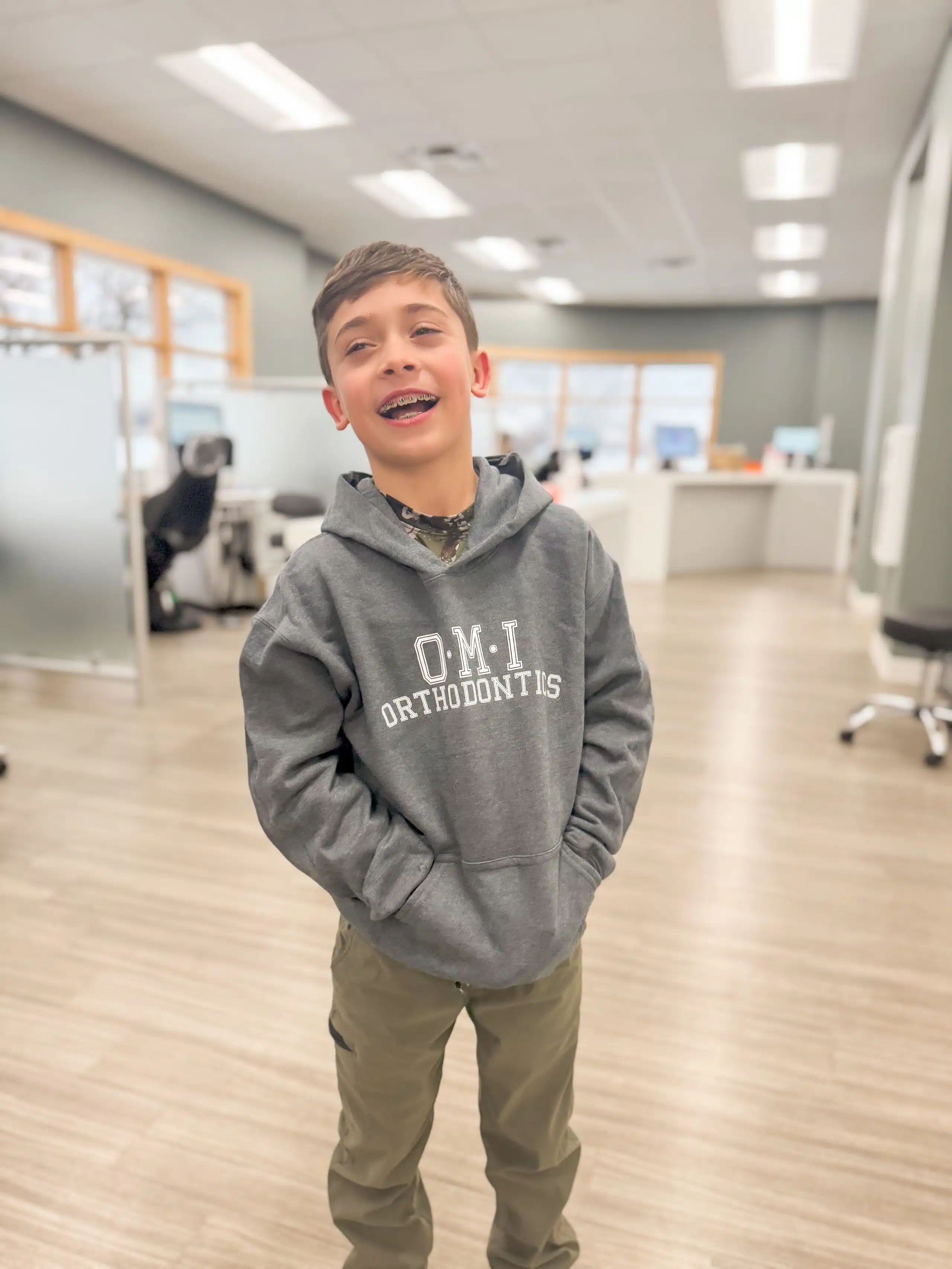
Orthodontic Evaluations (Ages 7+)
Comprehensive assessment of your child’s orthodontic needs. Early evaluation helps identify potential issues and create timely treatment plans.
- Development monitoring
- Growth assessment
- Treatment planning
- Parent consultation
Palatal Expanders
Gentle arch development for proper tooth alignment. These appliances help create space for permanent teeth and improve bite alignment.
- Gradual expansion
- Better tooth alignment
- Improved breathing
- Growth guidance
The Benefits of Early Treatment
Identifying orthodontic concerns during childhood allows us to guide proper development and often reduce future treatment needs. Early intervention can help guide jaw growth, create space for permanent teeth, and correct harmful habits. This proactive approach often leads to simpler, more effective treatment outcomes.
Child-Focused Orthodontic Care
We understand that early orthodontic care requires a special touch. Our team creates positive experiences that help children feel comfortable and confident about their treatment. We use age-appropriate explanations and encouragement, while working closely with parents to ensure the best possible results for your child’s smile.
Why age 7?
The American Association of Orthodontists recommends a first orthodontic check by age 7. Most seven-year-olds do not need braces. At that age, though, the first permanent molars and front teeth are in, the jaws are still growing, and a specialist can see whether the permanent teeth will have room. Problems with jaw width or bite are much easier to guide while a child is growing than to correct as a teenager. The first visit is free, and often Dr. Joel Johnson’s advice is simply to wait and watch.
Signs your child should be seen
Book an evaluation if you notice any of the following:
- Baby teeth lost very early or very late
- Crowded, overlapping or blocked-out front teeth
- Upper teeth that bite inside the lower teeth (crossbite)
- Front teeth that stick out or do not meet when your child bites down
- A jaw that shifts to one side when your child closes
- Thumb or finger sucking after about age 5
- Mouth breathing or a lisp linked to tongue position
What happens at the first visit
We take photos and, when needed, 3D images. Dr. Johnson checks how the jaws are growing, how the teeth meet and where the permanent teeth are coming in. Then he sits down with you and explains what he sees in plain language. Most children leave with one of two plans: a growth-monitoring schedule, or a short Phase 1 treatment aimed at one specific problem.
Monitoring vs. Phase 1 treatment
- Monitoring. Most children are simply watched. We see them for short check-ups while the permanent teeth come in, at no cost, until everything settles on its own or the right time for braces arrives.
- Phase 1 treatment. A smaller group starts a short first phase, often a palatal expander and sometimes limited braces, lasting several months to about a year. It corrects one problem, such as a narrow upper jaw or a crossbite. The appliances then come off and we monitor again until the permanent teeth are in.
Phase 1 usually does not replace braces later. Its goal is to make later treatment shorter and simpler, and in some cases it helps avoid jaw surgery.
How palatal expanders work
A palatal expander fits against the roof of the mouth and gently widens the upper jaw while its growth seam is still open, which is why timing matters. Widening creates room for permanent teeth, can correct a crossbite and gives the bite a better foundation. Most children get used to an expander within a few days.
Early treatment at our three Indiana offices
Dr. Johnson sees children at all three offices:
- Early orthodontic treatment in Fort Wayne, IN
- Early orthodontic treatment in Auburn, IN
- Early orthodontic treatment in Fishers, IN
When your child is ready for full treatment, see traditional braces and our new patient guide.
Frequently asked questions
Does my 7-year-old need braces?
Probably not. The age 7 visit is a check-up. Most children are monitored, and only some need early treatment.
Will my child still need braces after Phase 1?
Often yes, but the second phase is usually shorter and simpler because the foundation is already in place.
Is the first visit free?
Yes. The first consultation is free at all three offices.
Do I need a referral from our dentist?
No. You can book directly, and we accept all major insurance plans.