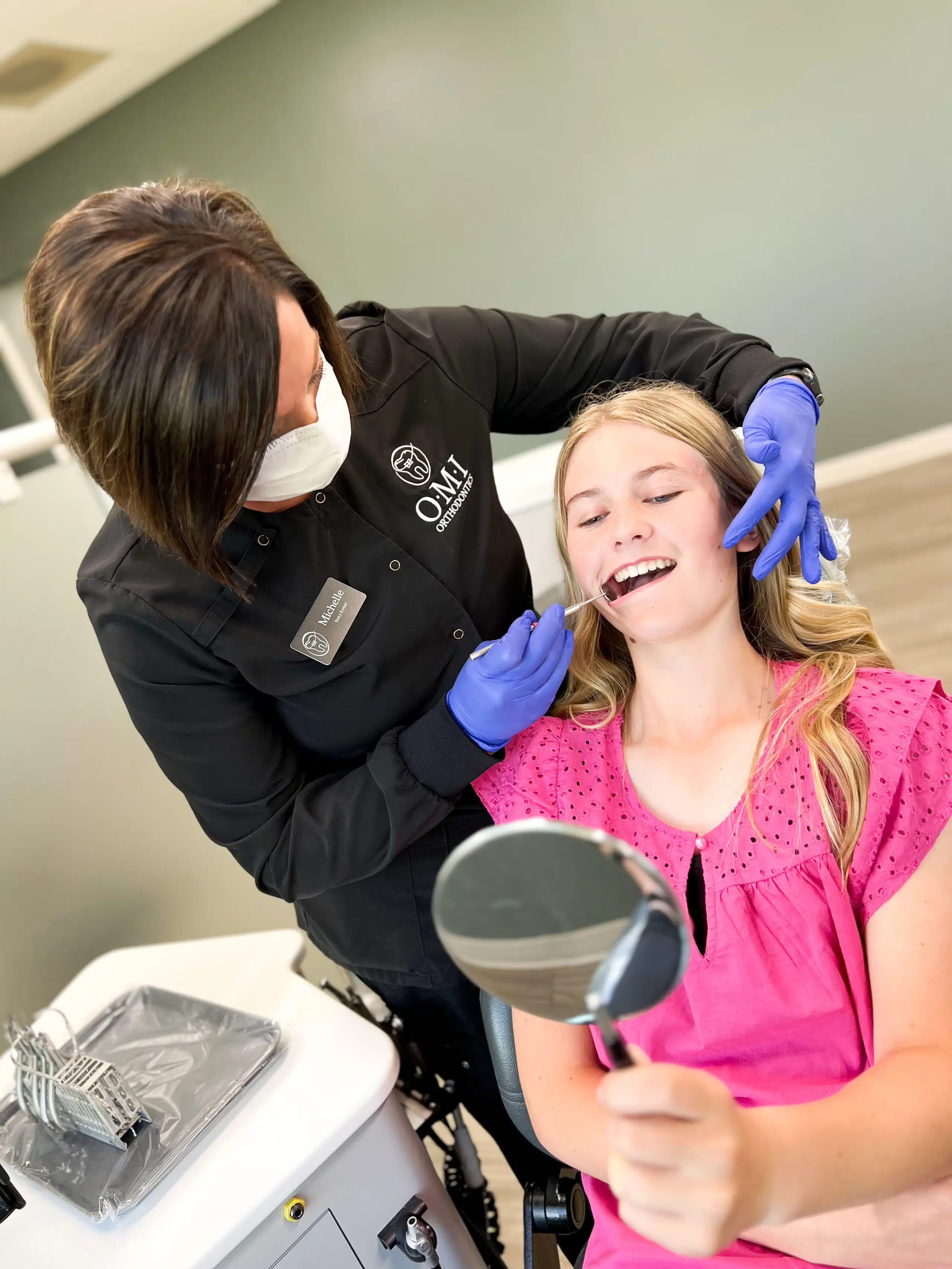
With braces, avoid sticky and chewy foods like caramel and gum, hard foods like nuts, hard candy and ice, and foods that get stuck in brackets, such as corn on the cob. Sugary foods and drinks are worth limiting too.
The first week with braces usually brings the same question at every meal: can I eat this? The good news is that most of what you already eat is fine, sometimes with a small change in how you eat it. The foods to watch fall into a few clear groups, and once you know why they cause trouble, the list is easy to remember. Here is what to avoid, what to eat instead, and why it matters for how long you wear braces.
Why Do Some Foods Cause Problems With Braces?
Braces work because each bracket stays firmly bonded to its tooth and the archwire stays seated in every bracket. Foods cause trouble in three ways. Hard foods put a sudden load on a single bracket and can pop it off the tooth or bend the wire. Sticky and chewy foods grip the brackets and wire and can pull them loose. Small, stringy, or crunchy foods wedge into spaces that a toothbrush has a hard time reaching.
Sugar is the fourth problem, and it works more slowly. Sugar increases the amount of bacteria that grows in your mouth, which causes more plaque and possibly cavities. Around brackets, plaque has more places to hide, so a high-sugar diet during treatment raises the risk of cavities, gum problems, and white spots on the teeth after the braces come off.
None of this means you have to give up everything you enjoy. It means choosing the right version of a food, cutting things into smaller pieces, and saving a few items for after treatment.
What Foods Should You Avoid With Braces?
The list below comes from the guidance we give our own patients. It is not every food that could cause a problem, but it covers the ones that most often lead to a broken bracket or a long cleaning session.
| Food group | Examples to avoid | Why it is a problem |
|---|---|---|
| Sticky and chewy | Caramel, chewing gum, gummy bears, Nerd Clusters, taffy | Grips brackets and wire and can pull them loose |
| Hard | Hard candy, nuts, raw carrots, ice cubes | Can break a bracket off the tooth or bend the wire |
| Gets stuck in braces | Corn on the cob, soft bagels, ribs, popcorn | Wedges between brackets and is hard to clean out |
| High in sugar | Candy, sweet snacks, sugary drinks | Feeds the bacteria that cause plaque and cavities |
Notice that some of these are healthy foods. Raw carrots and nuts are good for you, but biting into them whole is hard on braces. That is why how you eat a food matters as much as what you eat.
Can You Still Eat Healthy Foods Like Fruit and Vegetables?
Yes, and you should. Fruits and vegetables are an important part of a healthy diet, with or without braces. The key is preparation. Cut apples and pears into thin slices instead of biting into them. Cook or steam firmer vegetables like carrots and broccoli until they are tender, or slice them into small pieces. Cut corn off the cob before eating it.
The same idea applies to other favorites. Pizza crust, crusty bread, and soft bagels are easier on braces when torn or cut into small bites and chewed with the back teeth rather than bitten off with the front ones. Meat on the bone, like ribs and wings, should be cut off the bone first. These small habits protect your brackets without taking food off the table.
Packing lunches and snacks gets easier with a short list of braces-friendly staples: soft cheese, bananas and berries, soft sandwiches on sliced bread, pasta salad, applesauce, and crackers that soften quickly. Keeping a travel toothbrush or a bottle of water in a backpack makes it easy to clear away food after eating at school or work. Our second orthodontic FAQ also covers sports and everyday life with braces.
What Can You Eat in the First Few Days?
You may feel a small amount of discomfort for a couple of days as your teeth, gums, cheeks, and mouth get used to your new braces. Soft foods help during those first days. Think yogurt, soup, pasta, scrambled eggs, mashed potatoes, smoothies, and soft fruit. As the soreness fades, you can return to a normal diet with the precautions above.
What About Drinks While Wearing Braces?
Water is the safest choice, and rinsing with water after a snack is a good habit when you cannot brush right away. Sugary drinks such as soda and sweetened juices are worth limiting, because sipping them throughout the day keeps the teeth bathed in sugar and gives plaque more chances to build up around the brackets.
Patients with clear braces have one more thing to think about. The ceramic brackets themselves resist staining, but the small elastic ties that hold the wire can pick up color from coffee, tea, dark soda, and heavily colored sauces. Going easy on those, or rinsing with water right after, keeps the braces looking clear between visits. You can read more in our post on clear braces cost, care, and who they suit.
What Should You Do If a Bracket Breaks?
Even careful eaters occasionally loosen a bracket or bend a wire. If a bracket feels loose or a wire starts poking, call the office that treats you and our team will help. If a piece comes off completely, keep it and bring it with you.
Breakages are more than an inconvenience. Every broken bracket pauses the work that tooth was doing, and repeated breakage can add time to treatment. Our financial policies note that excessive breakage can also bring additional charges, and patients receive a call and text before any charge is applied. In short, the food rules are the easiest way to stay on schedule.
How Do You Keep Your Teeth Clean With Braces?
Food that gets caught around braces can lead to cavities and gum problems if it is left there. With braces, brush at least three times a day and after meals, and floss once a day to reach between the brackets where your brush cannot. Use a toothpaste that contains fluoride. Our team shows you how to brush and floss properly once your braces are placed.
Keep up your routine checkups with your family dentist every six months during treatment. It is even more important with braces, because food can collect in places your toothbrush cannot easily reach. Excellent oral hygiene, reduced sugar, and being selective with what you eat all help treatment move along. Our orthodontic FAQs answer more everyday questions about life with braces.
Frequently Asked Questions
Can I chew gum with braces?
No. Chewing gum is sticky and can pull on brackets and wires. It is one of the foods we ask patients to avoid throughout treatment.
Can I eat popcorn with braces?
Skip it during treatment. Popcorn hulls slip between brackets and under the gums, where they are hard to remove and can irritate the tissue.
How soon can I eat normally after getting braces?
Most people feel some discomfort for a couple of days after braces go on. Soft foods help during that time, and after that you can return to a normal diet while avoiding hard, sticky, and chewy foods.
Do the same food rules apply to clear aligners?
Clear aligners are removed for meals, so you can eat your usual foods. Brush before putting the aligners back in so food is not trapped against your teeth.
Start Your Braces Journey With Confidence
Knowing what to eat is one small part of a smooth treatment. Learn more about traditional braces at O·M·I Orthodontics, or start your free consultation at our Fort Wayne, Auburn, or Fishers office.