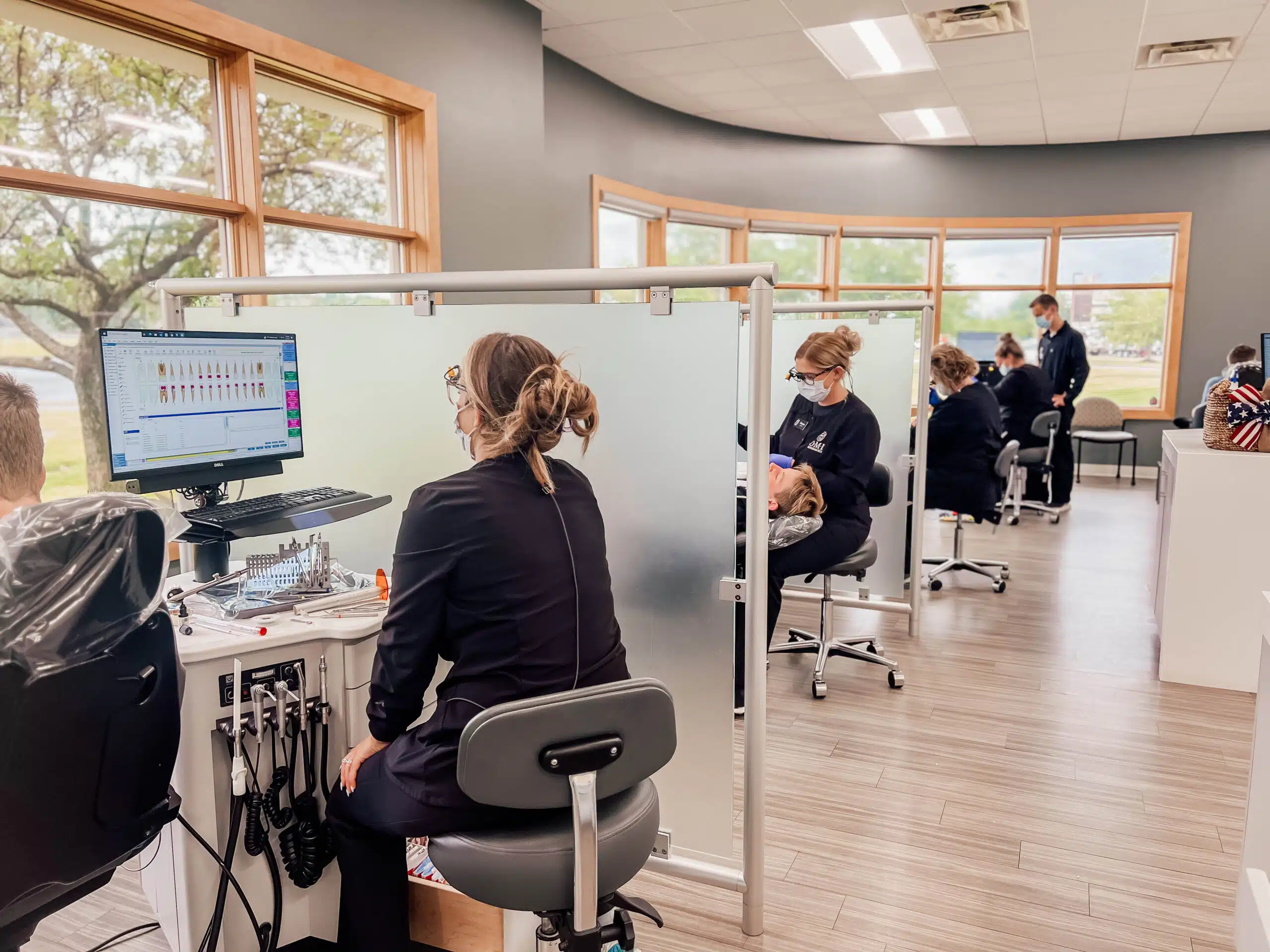
Getting braces put on does not hurt. Most people feel pressure and tenderness for a few days afterward, plus some rubbing on the cheeks while the mouth adjusts to the brackets. Soft foods, orthodontic wax, and an over-the-counter pain reliever usually handle it.
Pain is one of the first things parents and adults ask about at a consultation, and it is a fair question. Nobody wants to sign up for months of aching teeth. The honest answer is that braces are uncomfortable at a few predictable moments and comfortable most of the rest of the time. Below we walk through what each stage feels like, why the soreness happens, and the simple things that make the first week easier.
Does It Hurt When Braces Are Put On?
Usually not. Getting traditional braces placed takes one longer visit, and no shots are needed. The teeth are cleaned and dried, a bonding material is applied, and each bracket is set into place and hardened. The archwire is then threaded through the brackets and held with small ties.
The parts people remember are holding the mouth open for a while and the cheek retractor that keeps the lips out of the way. Neither one is painful, just a little tiring. When the appointment ends, the teeth usually feel normal for the first few hours.
That calm stretch is worth knowing about, because it means the tenderness that shows up later that evening or the next morning is expected. It is not a sign that something went wrong during placement.
Why Do Teeth Get Sore After Braces Go On?
Braces work by putting light, steady pressure on the teeth. The archwire is shaped to the smile we are aiming for, and as it slowly returns to that shape, it presses on each tooth. The bone and the ligament around each root respond to that pressure and gradually remodel, which is what allows a tooth to move.
That remodeling is the source of the ache. The ligament that holds each tooth in its socket gets a little inflamed in the first days, so biting down feels tender, especially on the front teeth. Chewing something firm can feel like pressing on a bruise.
The soreness tends to build over the first day or two and then fade as the teeth settle into the new pressure. Our FAQ describes it as a small amount of discomfort for a couple of days while the teeth, gums, cheeks, and mouth get used to the new braces.
What Does the First Week With Braces Feel Like?
Most people move through the first week in roughly the same pattern. Knowing it ahead of time takes a lot of the worry out of it.
| Time after bonding | What it usually feels like | What helps |
|---|---|---|
| First few hours | Teeth feel normal; brackets feel bulky against the lips | Get used to the feel; start practicing brushing |
| Evening to day two | Teeth tender when biting; front teeth most noticeable | Soft foods, cool drinks, an over-the-counter pain reliever |
| Days three to five | Ache fading; cheeks may have small sore spots | Orthodontic wax on any bracket that rubs |
| End of the first week | Most people feel close to normal and eat more comfortably | Keep cutting firm foods into small pieces |
Everyone is a little different. Some people barely notice the first week, and others want soft foods for several days. Both are normal ranges. If the teeth are still very sore after a week, call your office so we can take a look.
Do Braces Rub the Inside of Your Cheeks?
Often, yes, at the start. The inside of the lips and cheeks has never had anything resting against it before, and the brackets have edges. For the first week or two, it is common to get a small sore spot where the soft tissue keeps catching on a bracket.
This kind of irritation is different from tooth soreness. It is on the surface rather than deep in the teeth, and it improves as the tissue toughens up. Orthodontic wax is the main fix. Roll a small piece into a ball, dry the bracket with a tissue, and press the wax over it so the cheek slides over a smooth surface instead.
If a wire end starts poking the cheek, the same approach applies. Our braces page recommends covering it with orthodontic wax and calling your office. Most of these problems can wait for a quick repair visit rather than needing an urgent one.
Do Braces Hurt After Each Adjustment?
Sometimes, but usually less than the first week. At adjustment visits, which come every six to ten weeks, the wire may be changed or tightened so the teeth keep moving. That fresh pressure can bring back a day or two of tenderness, similar to the start of treatment but milder.
Many people notice that the ache after an adjustment is shorter each time, partly because they know what to expect and plan soft meals for that evening. Some adjustments cause almost no soreness at all. Adding new pieces partway through treatment, such as rubber bands, can create a short period of pressure as well.
Because O·M·I Orthodontics offices open at 7:30 a.m. Monday through Thursday, many students and working adults book adjustments before school or work. If you know the evening after an adjustment tends to be a little tender, it can help to plan an easy dinner that night.
What Helps Braces Pain Go Away Faster?
A few simple habits make a real difference. Our braces FAQ points to soft foods and an over-the-counter pain reliever for the days after bonding and after adjustments. Always follow the dosing on the label and check with your doctor or pharmacist if you have questions about a specific medicine.
Soft, cool foods are easiest in the first days: yogurt, smoothies, soup that has cooled, scrambled eggs, pasta, mashed potatoes, and soft fruit. Cutting food into small pieces and chewing with the back teeth takes pressure off tender front teeth. Hard candy, ice, popcorn, and caramel are among the foods to avoid with braces for the whole of treatment.
Wax handles cheek irritation, and patience handles most of the rest. Pressing or wiggling the brackets with your tongue tends to keep the area irritated, so try to leave them alone while the mouth adapts.
When Should Braces Discomfort Be Checked?
Normal braces soreness is a dull ache that fades over a few days. It is worth calling your office if something feels different from that pattern, such as a loose bracket, a wire that has slipped out of place, a poking wire that wax does not settle, or soreness that keeps getting worse instead of better.
Our orthodontic FAQs also note that braces will not stop you from playing sports or an instrument, though both may take some adjustment at first. For contact sports, wearing a mouthguard protects the braces and the lips, and the office has several types of mouthguards that can be supplied to patients.
Frequently Asked Questions
How long does braces pain last?
Most of the tenderness after braces go on lasts a few days, and many people feel close to normal by the end of the first week. Soreness after adjustments is usually shorter and milder.
Do kids feel more pain with braces than adults?
The process is the same at any age: light pressure moves the teeth, and the teeth feel tender while they respond. How much each person notices varies, so it helps to plan soft meals for the first few days no matter how old the patient is.
Can I go to school or work the day after getting braces?
Yes. Braces do not require time off. The teeth may feel tender, so packing soft foods for lunch and bringing a little orthodontic wax makes the day easier.
Are ceramic braces more uncomfortable than metal braces?
Metal and ceramic braces move teeth the same way, so the tooth soreness is similar. Ceramic brackets are slightly larger than metal ones, and wax works on either type if a bracket rubs.
Ask Your Questions at a Free Consultation
If worry about discomfort is holding you or your child back, talk it through with Dr. Joel Johnson. At a free consultation we examine the bite, take photos and 3D images, and explain which options fit and how long treatment should take. Start your free consultation at our Fort Wayne, Auburn, or Fishers office.